WISHING MORE SMALL AND MEDIUM ENTERPRISE
15 December, 2011


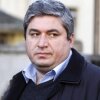
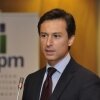
Interview with Ambassador of Poland in Georgia Urszula Doroszewska

We are pleased to invite our readers to the most exciting and colorful world of ambassadors. Our goal is to enhance and strengthen links between the media and diplomatic corps accredited in Georgia.

We believe, it is a marvelous possibility for foreigners to get a first-hand impression of the representative and share his/her opinions about different issues. The first guest of this column was Mrs. Urszula Doroszewska, Ambassador of the Republic of Poland who herself proves to be a journalist.


G.J: When did you arrive in Georgia?

U. D: I arrived in Georgia on December 1, 2008. This is my first mission. Before that, I worked at the Chancellery of the President Lech Kaczynski as a Director for Foreign Affairs.

G.J: What were your first impressions of Georgia?

U.D: What do you mean? My very first impression of Georgia was shooting at the Tbilisi airport – it was in 1992, just after the civil war.

G.J: Yes, it was the darkest period for Georgia. What can you say about the country today?

U.D: I was writing a lot about Georgia, as I’m a specialist of South Caucasus. I was a journalist too. I was working for the Institute of Eastern Studies. I am a sociologist as well. So my knowledge of the South Caucasus comes from my experience and the experience of other specialists. Since then, I have been to Georgia many times. I accompanied President Kaczynski  6-7 times during his visits to Georgia, before I started my mission. I did not have any false expectations of this country as I was very much involved in its development.

G.J: What can you say about your host country as a person and as a diplomat?

U.D: People are same everywhere, but everyday life in Georgia is good – people on the street and people in the shops are nice. They like Poland and that’s why they like me, as they know me from the television. So, living in Tbilisi is very pleasant as I get very good feelings from Georgians. As a diplomat, I would very much wish to Georgia to be closer to Europe and to NATO because I think it is the best way, and also because I live in the country that is prosperous and safe and I would like Georgia to be as prosperous and safe as Poland; so I’m working for friendship and cooperation of our countries and I would like to help Georgia to be more close to my country.

G.J: What can you say about Georgian cuisine?

U.D: I like the Georgian food very much. The products here are delicious, especially fruit and vegetables.  I like Georgian dishes. But for me the problem is that Georgian people like to eat at night. I cannot emulate it. It’s a problem for me, because the diplomatic meetings start at eight or nine in the evening and sometimes they end at eleven; it’s too difficult for me.  I prefer to eat big breakfast. I can compare it to the dishes of the European Union countries. Georgian dishes are  much better because the products here are better. My favorite Georgian dish is chicken with garlic.

G.J: What is your favorite sphere of Georgian culture?

U.D: I am fond of Georgian architecture. For me the most important part of Georgian culture is its traditional architecture, Georgian churches and frescos. I think it’s unique. I must say that my country is not as old as Georgia. Poland started its statehood in the 10th century and only in the 10th century we built our first churches. That’s when we were baptized. At that time all churches were made of wood. So, we don’t have such a unique architecture as you have. My favorite churches in Georgia are Jvari in Mtskheta and Anchiskhati in Tbilisi; I think the first is the most beautiful and the second is the best place to pray.

G.J: Can you name your favorite Georgian artist?

U.D: My favorite Georgian artist is singer Nani Bregvadze. Unfortunately, I cannot find her CD. I bought an old black record of her fifteen years ago. Then I bought the record of her concert but it was badly done – perhaps it was a pirate version. I cannot find the same concert on CD.

G.J: What does your everyday schedule look like?

U.D: Every day is different. I cannot say anything about the schedule because I have a lot of work and different events in the embassy and in many different places of Georgia. One thing I can say is that every day I come to work in the morning and go home at 11 in the night, and what I do during these hours is always different. Of course, our main priority is to strengthen the relations between Poland and Georgia. We had a lot of official visits this year. In the end of July we hosted our President Bronislaw Komorowski in Georgia. Two weeks ago our First Lady Anna Komorowska visited Georgia. We opened the Children’s House co-financed by the Republic of Poland jointly with the First Lady of Georgia Mrs. Sandra Roelovs. It was a big event for us as we cooperate with the First Lady; as a result of our cooperation the children’s house was opened. We attract a lot of international aid. We realize a lot of social projects with our Georgian partners. Children’s House is one of our joint projects that we have realized for the last three years. We are in close cooperation with the Georgian Ministry of Social Affairs, the office of Mr. Urushadze. We also work in the field of education of blind people. But our main programs are connected with the Georgian Ministry of Regional Development. We have a lot of visits from Poland and a lot of trainings conducted by Georgian-Polish specialists. We also have a lot of twinning programs between the cities of Poland and Georgia. For instance, Kutaisi and Poznan are twin towns, and recently Borjomi and Zywiec have become twins too; it is a very good and very beautiful cooperation.

G.J: How different are your weekends from our weekdays?

U.D: They are not very different because we have so much work and so many official events.

G.J: What is your favorite pastime in Georgia?

U.D: Whenever I have free time, an hour or half an hour, I prefer to spend it with my husband.

G.J: Now, let’s talk about the Georgian political culture. What are its main drawbacks and how would your recommendations sound?

U.D: Again; it’s to get closer to Europe.

G.J: What is your opinion about the Georgian media? What are its week points?

U.D: My opinion about the Georgian media is not very good. My everyday experience is contacts with the journalists from local TV stations. They come to the official events and ask me to say something, but they are absolutely not prepared. I tell them: ask me the question, and their only question is: tell us about today. I say: today what? The answer is: today’s conference. And it’s in vain. They want me to answer not after but before the event – what is going on? - etc. I think it’s not interesting for the public. I am on television every third days but I don’t know for what purpose. In the end, they ask me my name, my surname and job. I ask them: don’t you know with who you are talking? So why do you ask me, ask other people – because you are an ambassador – but if you know that I am an ambassador why do you ask me what’s my job? The people talking to me are different but the situation is absolutely the same. I don’t understand it. Perhaps, they are not well paid. I was meeting media in Poland and other countries very often, but journalists were asking questions there. I may not like the question and I may have to look for a restrained answer, and I must be prepared for it. But here you can say nothing. My experience with Georgian written press and radio is much better.

G.J: What about the Georgian penitentiary system?

U.D: A very good system started five years ago with the support of Poland to help drug addicted women who have been imprisoned. At that time it was in the competence of the NGO sector and now it’s only conducted by the Ministry of Internal Affairs.

G.J: Last but not least, what would you recommend to the Georgian authorities, what is the step that they should take first and foremost in order to set the development of the country in the right direction?

U.D: I don’t want to give a lot of advices, but I would like to see more small and medium enterprises in Georgia.


Other Stories
Isolating Autism?
In Georgia, a lot of people with Autism seem to go unnoticed and undiagnosed. For many Georgian families, having a child with an Autism Spectrum Disorder may not be the life they had envisioned or want to acknowledge. But plans to raise awareness of the complex brain disorder have been recently put into action. Autism is a disorder that impairs people’s social communication due to improper brain development. Though it does affect adults, it is most prevalent in children. According to Mayo Clinic, “children with autism generally have problems in three crucial areas of development — social interaction, language and behavior.”
Cooperatives Europe General Assembly & Georgia
May 6, 2013 Dirk Lehnhoff, the 55 year old German lawyer with extensive international experience in cooperative legislation development and with the support of countries like the Russian Federation, Estonia, Serbia, South Africa and others was elected president of Cooperatives Europe.
Tipsy Outdoor Festival
On May 11, at the Ethnographic Museum under the open sky (below Turtle Lake), New Wine Festival was held for the fourth time. It was meant to be the most democratic festival that is free for everybody, once again reminding us that we live in Georgia - the cradle of wine, which is already a landmark registered in Europe.
Estonians Celebrate EU Day with Impressive Concert
Europe Day was also marked by Tbilisi Music Week. On May 10, the Estonian Embassy in Tbilisi hosted a concert party at the Royal District Theatre.
JONJOLI FOREST HOSTAGES
Exclusive report from the ‘bordering’ village of Sachkhere region

Dwellers of Sachkhere region (Western Georgia) have come to pieces – kidnapping of people still goes on there in the 21st century. Today, instead of Lezhgians Georgians are kidnapped by Ossetians. Several days ago from the nearby forest Ossetians kidnapped 4 inhabitants of Khvani village of Sachkhere region. In Khvani we visited Petre Rikadze whose son, grand-son and nephew were taken prisoner by Ossetians.
BRITISH ROYAL COURT JEWELER AMAZED BY GEORGIANS
‘I LEARNT FROM GEORGIANS THE MEANING OF ‘TSUTISOPELI’

Jeweler’s art, reflecting English culture and traditions, in which Mark Evans and his family were engaged since 1934, was their family business; it was not left unnoticed by the Queen of Britain and the Prince of Wales. As a token of recognition, Mark was honored to become the jeweler of the Royal family.
Georgia Takes on Drugs Decriminalization
Coalition of NGOs appealed to the new parliament with the idea of decriminalization of drugs. Deputy of Chair of Health Committee Koba Davitashvili is the author of the bill that was initiated. The idea of the project is to help drug addicted individuals re-socialize not to punish them according to the criminal code, because “it thwarts the process of re-socialization”. The project has opponents too.
IF THIS GOVERNMENT DIDN’T COME TO POWER...
Gela Barkalaia, founder and head of ‘Mate Motors’ was among the privileged people, for whom all roads for doing business, were open. He was proud of friendship with the Nationals and even inscribed figure ‘5’ with flowers in front of his office. But one day his and the old friends’ roads parted. Barkalaia was detained and made to pay a solid sum.
Unstable and rainy weather to last in Georgia for about 10 days
Unstable and rainy weather will last in Georgia for approximately 10 days. The weather will brighten up in some regions today, but it will still be raining in Tbilisi
I didn’t go to Church on Easter
My very Georgian friend Mancho, who lives on the West coast, called me up on the East Coast at three o’clock in the morning to yell and complain. And while I was mostly asleep, she managed to convey her frustration in such a manner that I was immediately awake. What had happened was the following. A recent transplant from Zugdidi, a young computer technician had come to Los Angeles. This fact on its own would not be any of our business, but the Georgian transplant then proceeded to make friends with Mancho in a grocery store line.
Georgia: Marrying to Divorce?
Georgia has recently been noted for having high divorce rates. More and more people are deciding to terminate their holy marital unions. It looks like some relationships do come with an expiration date.
TSEKAVSHIRI – old name, new substance, fresh ideas!
Doctor of economics ROIN ADAMADZE – chairman of the board of TSEKAVSHIRI (Central Union of Georgian Consumer Co-operatives) has given a modern substance and new direction to the Union, which has facilitated for Georgia to become the member of International Co-operative Alliance. Having read through his newly-created document called ‘Development Conception’ very carefully, I came to believe that it does not even smell like the antiquated TSEKAVSIRI, the soviet-type agro-industrial production & trade conglomerate, stuck in between the socialist planned economy and the capitalist free market like an unfitting peg in a wrong hole.
Writer Guram Panjikidze – 80
The well-known Georgian novelist Guram Panjikidze would have been 80 on the 22nd of April of 2013. He lost his life tragically at the age of 54 when this talented man of letters was full of vigor, thoughts and creative energy. I remember like yesterday how the astounded nation was shocked and traumatized to have so unexpectedly lost the man whose patriotic life and sharp pen were both unreservedly put at the altar of serving the Nation faithfully. I knew Guram personally and it was very hard to imagine him lifeless – always moving, always working, always in action!
New Book by Prof.Tvalchrelidze
‘Economics of Commodities and Commodity Markets’ (906 pages) was written in the English language by the author and published in New York, and it is available on www.amazon.com. Professor Alexander G. Tvalchrelidze is giving in his fresh techno-economical opus a detailed monographic description of the main commodities: crude oil, natural gas, coal, uranium, iron, manganese, aluminum, chromium, nickel, cobalt, titanium, copper, lead, zinc, gold, silver, platinum group metals, rare metals including molybdenum, tungsten and tin, industrial minerals, diamond and gems, food commodities and livestock. This book includes characteristics of the world’s crude oil and natural gas network, information on crude oil, LNG, and coal ports and terminals, tanker and LNG fleet, new world pipeline projects, etc. Information on geopolitics and geo-economy of commodities as well as comparative and correlation analysis of commodity prices are also given.
Week of Europe in Georgia
From May 7 to May 11, Georgia marks the Week of Europe. The Week of Europe traditionally coincides with May 9. The Days of Europe are for the first time organized by the Information Center for NATO and European Union. It is noteworthy that this week, European Union marks its 52nd jubilee. Europe Week opened at Georgian Parliament’s National Library.
Also on the Web
A car hit a policeman outside the prosecutor’s office, the InterPressNews correspondent informs.
An 80-year-old Japanese mountaineer has become the oldest person to reach the summit of Mount Everest.
The weather in Western Europe this month could easily have been mistaken for mid-winter. Around the French mountain community of Little Saint Bernard, very close to the border with Italy. In the Alps, the snow ploughs have been out daily.
Stages for the May 26 celebration of the Independence Day of Georgia are being prepared on Rustaveli Avenue, with the area outside the former parliament building featuring a replica of Georgia's Act of Independence situated in the middle of a white stage.
Several hundred citizens gathered in Deda Ena Park in Tbilisi on May 24 to protest against the May 17 incident on Rustaveli Avenue involving church representatives and their supporters against a planned demonstration
Former football player and currently Energy Minister Kakha Kaladze took part in the first training session ahead of his May 31 Farewell Match involving Georgian and international players.
Interior Minister Irakli Gharibashvili arrived at the scene of two May 24 protests in Deda Ena Park in Tbilisi in a vehicle. The minister did not make comments for the media, but kept an eye on the processes
Singer Bera Ivanishvili will debut two new songs for Kakha Kaladze Farewell Match on May 31.
President Mikheil Saakashvili met President of Haiti Michel Martelly, with their discussion concerning reforms in Georgia.
Toupee-wearing and more over-dressed than an audience has ever seen him – Michael Douglas takes on the role of gay, flamboyant pianist Liberace in “Behind the Candelabra”.
GEL Exchange
GBP
1
GBP
2.4736
RUB
100
RUB
5.2209
TRY
1
TRY
0.8866
EUR
1
EUR
2.1206
USD
1
USD
1.6350