While I am Georgian by birth, as for many children of the former Soviet Union, Georgian is not my first language, nor is it the second. I do try to learn as much as I can, by reading books and talking to friends and family, but living in the States or any foreign country it requires somewhat of an effort to keep studying on my own. For people like me, and others willing to learn a new language, a Georgian Rosetta Stone would not be such a bad idea.
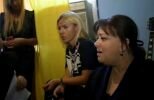
I keep that in mind as I spend tedious amount of time researching grants to allocate funds for such a venture. Meanwhile, for lack of such a program, I’ve stumbled onto something even better to help me learn a bit of my own language. As a child I remember watching American cartoons dubbed in Greek, because that was the only country my family could get foreign tapes from that were on European system. I watched ‘He-Man and She-Ra’ and ‘Transformers;. This was during pre-internet and definitely pre-google, basically the Dark Ages. No one in the family knew Greek, but my sister and I managed to figure out and memorize few key words that let us navigate the cartoons with more understanding. When we went to Greece years later, those words were still stuck in our heads and turned out to be quite useful, if you count telling the taxi driver to ‘Let’s hurry, we need to transform’ and ‘ I have lost my power’ to the hotel staff, when the power went out in our room. At least we tried. So in the same spirit, and with less heavy burden, because I do speak better Georgian than Greek, I started to watch Rustavi2 Series called ‘Chemi Colis Daqalebi’ translated as ‘My wife’s girlfriends.’ I figured if I could apply the same principles I did to ‘Transformers’, I would be able to speak fluent Georgian in no time. For those of you not familiar with the show, let me say it is brilliantly written, acted, produced and directed and definitely worth watching. The series is a story of three girlfriends, Nina, a married mother of two, Tina a working single woman living with her mother (the gem of the show, Neliko) and Kato, a single, and I’d like to say, working woman, but if you watch the show you’ll know the only thing she works is her charm on men. All three characters are friends from school, and the series follows their interwoven lives and those of their close friends and sometimes enemies through Tbilisi streets, cafes, clubs and homes.
I was so excited to have found the show I could understand and learn from that I watched ten episodes a day (talk about complete emersion). On day three, when I was almost all the way up to the latest episode, I went out with a Georgian friend of mine. I meant to talk about the latest series of paintings I was doing based on poetry, when I realized she was looking at me funny. Apparently I’ve been talking in Georgian, which wasn’t all that unusual, I always tried to speak it when I am out with my friend, but it was the kind of Georgian I was using that confused her. All of the sudden I was using words like ‘tekhavs’ and ‘vaime,’ ’au me ra vizi’ with intonations that did not belong to me. To my horror and my friend’s amusement out of all the characters on the show, I had picked up on Kato’s way of speech. Why couldn’t I pick up polite and accurate way of Tina’s speech? I don’t know, but I’ve got to hurry up and get Rosetta Stone to add Georgian into its repertoire or I am doomed to lifetime of ‘vaimes’.